Explore All Exams at KGS


All Exams
Explore All Exams at KGS

Khan Sir Courses
Geography I Polity I History | World Map I Indian Map I Economics I Biology

UPSC & State PSC
UPSC I BPSC I UP-PSC I MP-PSC

State Exams
UP I Bihar I MP | Rajasthan

NEET | JEE | CUET
NEET | JEE | CUET

Defence Exams
NDA I CDS I CAPF I AFCAT I SSB I Agniveer

Police Exams
UP SI | Bihar SI | Delhi Police | UP Constable

SSC Exams
CGL I CPO I CHSL I MTS I SSC GD I Delhi Police

Foundation Courses
Physics I Chemistry I Biology I History I Geography I Polity I NCERT I Math I English | Map I Reasoning

Railway Exams
RRB | RPF

Teaching Exams
TET | Teaching | UGC

Banking Exams
SBI | RBI | IBPS

Engineering Exams
Civil | Electrical | Mechanical
UGC NET
UGC NET/JRF
News Highlights provides you with the best compilation of the Daily News Highlights taking place across the globe: National, International, Sports, Science and Technology, Banking, Economy, Agreement, Appointments, Ranks, and Report and General Studies

1.
Chips to clean energy, India and Netherlands upgrade ties to strategic partnership
Elevating their bilateral ties to a strategic partnership, India and the Netherlands have agreed on a five-year roadmap (2026-30), and signed as many as 16 pacts including agreements on semiconductors, critical minerals, migration and mobility, water and renewable energy.
2.
4 years on, Govt plugs cost escalation loophole in Jal Jeevan projects
A key safeguard to regulate spending under Jal Jeevan Mission, the Centre's showpiece rural tap water scheme, has been reinstated in new rules to govern the initiative -plugging a gap that had led to cost escalations in projects far beyond official estimates.
The safeguard, called "Tender premium", refers to the additional amount quoted by a project bidder that is higher than the Government's estimated cost. It was part of the original rules for the scheme drafted in 2019, and effectively meant that states were not allowed to use Central funds to cover the additional amount.
3.
A bridge too far? India's only ape species gets helping hand, but needs bigger steps
The first instance globally of a western hoolock gibbon using an artificial canopy bridge over a railway line was recorded in Assam's Hollongapar Gibbon Sanctuary recently, offering cautious optimism for the survival of India's only ape species.
4.
MEA rejects Dutch PM remarks on press freedom, rights of minorities in India
Delhi on Sunday rejected Dutch PM Rob Jetten's reported comments on press freedom and the rights of minorities in India, saying the country is a "vibrant democracy" that guarantees free speech to all.
5.
At Beijing summit, both Trump, Xi got what they came for. But Xi got a bit more
Donald Trump's state visit to China was a performance of diplomacy: Carefully choreographed, heavy on optics, and light on binding detail.
Both sides were eager to show progress: Trump called the visit "very successful"; Xi Jinping declared it "historic". The Chinese catered to Trump's weakness for spectacle with the state banquet, the parting tea, and Xi accompanying Trump to the Temple of Heaven-but the substance, as expected, was meagre. Significantly, Beijing, not Washington, controlled the narrative throughout.
6.
Needed, a law to shield Indian firms from sanctions
An anti-sanctions regime is commonly known in international law as a 'blocking statute'. It is a mechanism used by countries to reduce or mitigate the impact of sanctions on their citizens and businesses.
7.
The challenge for India's renewables surge: Storag
Electricity demand can surge at night, when, say, solar output is not available
This mismatch between when electricity is generated and when it is needed can stretch the grid and even threaten its stability.
8.
Amid immigration curbs, US scheme for graduates under scanner
OPT allows graduates a pathway to work in the US. Indians make up nearly half of all OPT participants
Many have, however, allegedly used fraudulent paperwork and fake employment arrangements to remain in the US.
9.
Great Nicobar megaproject: Case before HC hinges on legality of tribal consent
Earlier this month, the Calcutta High Court's Port Blair circuit bench agreed to hear a PIL petition by former Union government secretary Meena Gupta, alleging violations of the Forest Rights Act (FRA), 2006, while seeking tribal consent for the Great Nicobar Island (GNI) infrastructure project. The Union government and the Andaman and Nicobar Islands administration had raised preliminary objections regarding the maintainability of the petition and two other matters: on the reduction of the buffer zone of Galathea National Park and Campbell Bay National Park.
10.
US nuclear cos tapped for inputs on investment potential in India
US Secretary of Energy Chris Wright was part of an official briefing with members of a high-powered American nu-clear industry delegation headed for India on Sunday.
During the course of the briefing, US-based nuclear firms that have prior exposure to India or have received official approval from the US Department of Energy in recent months to transfer nuclear technology to Indian entities were invited to share insights on the investment potential of the Indian market with others in the US industry grouping.
11.
Avoid reliance on single nuclear tech supplier: NTPC Chief
The country must be watchful of becoming over-dependent on a single supplier or nation for nuclear technology as it moves ahead with the 100GW nuclear power plan, cautioned NTPC Chair Gurdeep Singh.
He said India should prioritise control over technology and resources, even if domestic options are 5-10% costlier at the initial stage, to avoid the supply chain vulnerabilities currently seen globally.
12.
A shift in nuclear sector governance
Earlier, in December, Parliament passed the Sustainable Harnessing and Advancement of Nuclear Energy for Transforming India (SHANTI) Act, 2025, marking a major shift in governance of the tightly-controlled nuclear power sector.
For the first time, the Act opened up the sector's operations side and areas like fuel management to private players, that had been under tight public-sector control for decades.
Along with a larger role for private sector in nuclear plant operations, the new legislation also paves way for deployment of imported Light Water Reactor-based projects, aided by foreign funding. It opens up the possibility of more imported LWR-based nuclear projects of the kind being set up in Kudankulam, Tamil Nadu by the Russians. India is also keen to look at the possibility of the deployment of small modular reactors or SMRs. Though India's civil nuclear programme has expertise in manufacturing pressurised heavy water reactors 220 MWe PHWRs all the way up to the new 700 MWe reactors - an impediment of sorts for the country's nuclear establishment is its reactor technology.
Based on heavy water and natural uranium, the PHWRS are a technology that the nuclear establishment has a mastery over, but one that is increasingly out of sync with the LWRs that are now the most dominant re-actor type across the world. The Americans, the Russians and the French are among the leaders in LWR technology. Further, India's dominant nuclear technology, its mainstay PHWRs, has scalability issues.
13.
Oil market impact worse than anticipated earlier: The worry for India
The ongoing West Asia war and the Strait of Hormuz' resultant closure are proving more disruptive to global oil flows than initially anticipated, especially for large importers like India.
This crisis is a serious head-ache for India, the world's third-largest consumer of crude oil with an import dependency level of nearly 90%, making the economy and the foreign exchange reserves vulnerable to oil price shocks.
About 40% of the oil imports used to come via the strait.
14.
CAPITAL ACCOUNT INFLOWS PEAKED 2 DECADES AGO
The West Asia war has complicated India's external balance, with the import bill widening and the rupee weakening, as the latter accelerates outflows.
But capital account inflows like foreign direct investment have been falling for years, at least as a percentage of GDP, even if absolute numbers have been rising.
"This is not to say India is not getting inflows, but its relative investment attractiveness appears to have a double-edged problem, especially in a world where the dominant FDI investment flows are shifting feverishly away from sectors where India has a competitive advantage, and more towards which can negatively impact India's services exports," BofA Securities said in a note.
15.
'India, other oil importers to bilaterally negotiate transit corridors with Iran'
India and other oil importing nations are likely to negotiate bilaterally to secure energy supplies, potentially through coordinated transit corridors, but a return to prewar traffic volumes is unlikely in 2026, Moody's Ratings said.
16.
Ebola outbreak in Congo & Uganda an 'emergency' of global concern, says WHO
An Ebola outbreak in the Democratic Republic of Congo and Uganda has been declared a public health emergency of international concern by the World Health Organisation, after 80 suspected deaths.
The WHO said the outbreak, caused by the Bundibugyo virus, does not meet the criteria of a pandemic emergency but that countries sharing land borders with the DRC are at high risk of further spread.
WHAT IS EBOLA?
Ebola disease is a severe, often-fatal virus, which causes fever, body aches, vomiting and diarrhoea, and spreads through direct contact with the bodily fluids of infected persons.
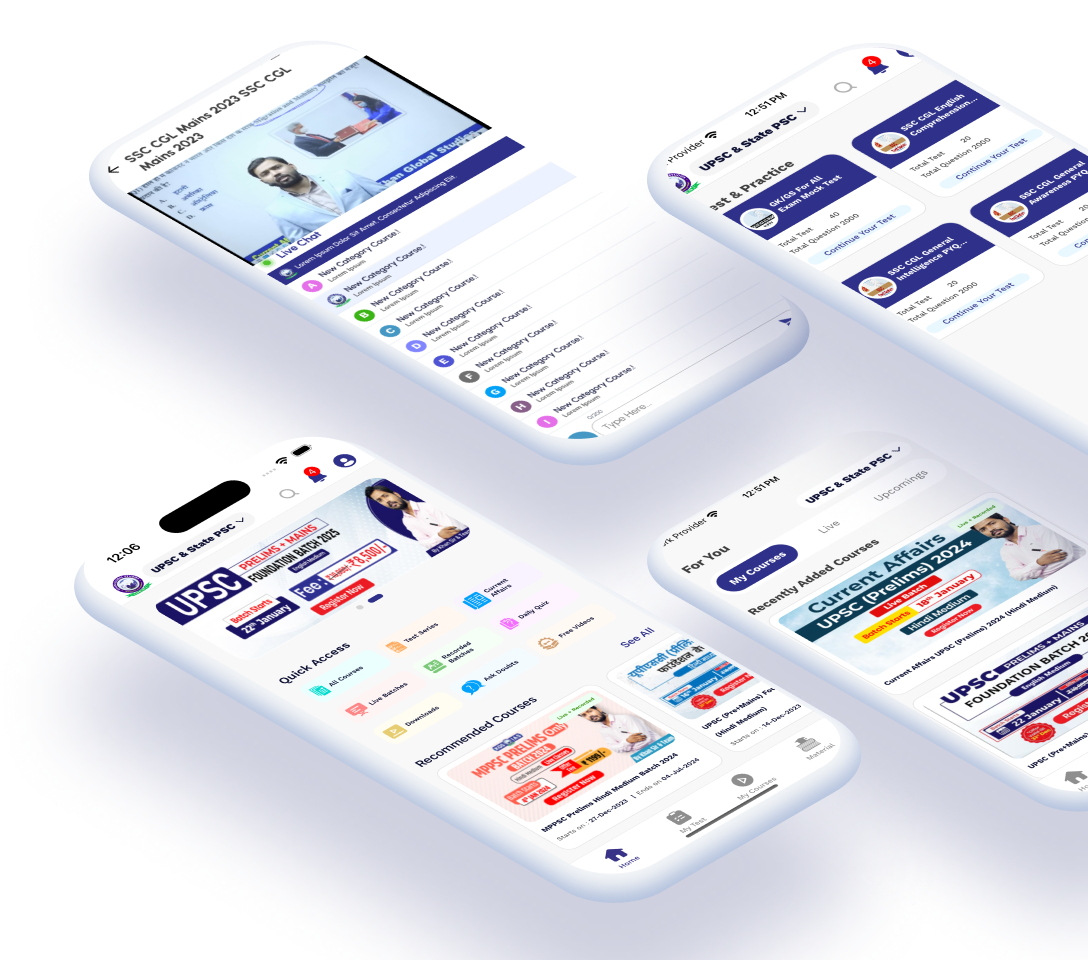
Khan Global Studies App
With our training programs, learning online can be a very exciting experience. Take the next step toward achieving your professional and personal objectives.


Course Related Query:
Ask Your DoubtsStore Related Query:store@khanglobalstudies.comNCERT Books
Resources
We love learning. Through our innovative solutions, we encourage ourselves, our teams, and our Students to grow. We welcome and look for diverse perspectives and opinions because they enhance our decisions. We strive to understand the big picture and how we contribute to the company’s objectives. We approach challenges with optimism and harness the power of teamwork to accomplish our goals. These aren’t just pretty words to post on the office wall. This is who we are. It’s how we work. And it’s how we approach every interaction with each other and our Students.
Come with an open mind, hungry to learn, and you’ll experience unmatched personal and professional growth, a world of different backgrounds and perspectives, and the freedom to be you—every day. We strive to build and sustain diverse teams and foster a culture of belonging. Creating an inclusive environment where every students feels welcome, appreciated, and heard gives us something to feel (really) good about.